What I Teach Is What I Had to Learn
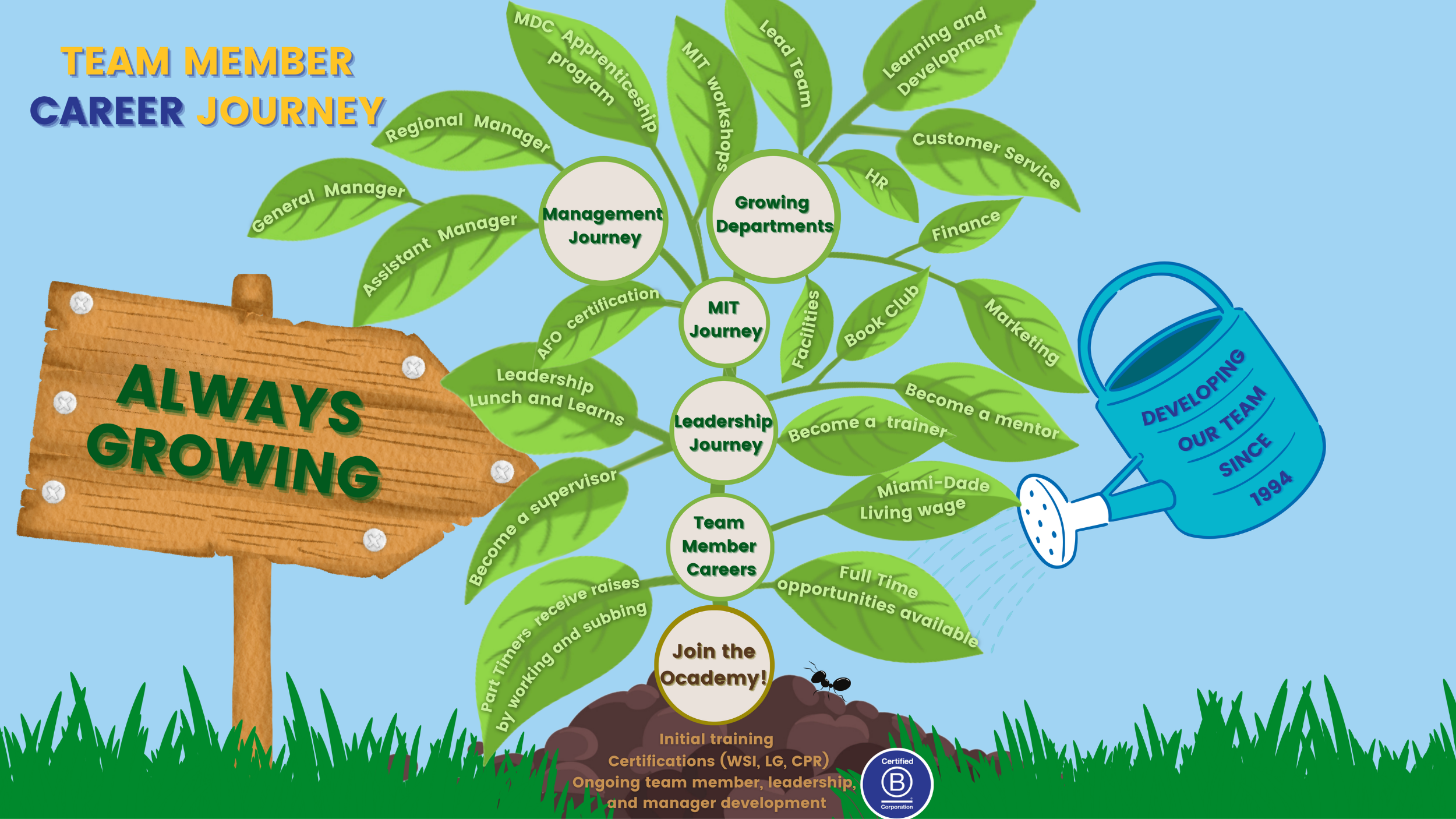
Great leadership isn’t something you start with. It’s something you learn along the way. After 32 years of building Ocaquatics, I’ve learned that leadership development, people-first culture, financial literacy, and employee ownership come from experience, mistakes, mentors, and a willingness to keep learning. Everything I teach today is something I first had to learn myself!
People sometimes tell me they wish they knew how to run a business the way I do.
I appreciate that. But I want to be honest about where the lessons came from.
Everything I teach and speak about is something I had to learn on the journey.
I did not begin with a playbook for leading people, understanding financials, building culture, or making difficult decisions. I began as a young single mom teaching swim lessons, trying to make a business work and learning as quickly as I could.
Over the last 32 years, I became a serious reader. I sought mentors. I learned by listening. I made mistakes, reflected, and tried again. I learned how to connect people, because no meaningful business is built alone.
Most of all, I learned that leadership development is not a side project. It is the work!
The business grew because people grew. My role became less about having every answer and more about creating an environment where people could learn, take ownership, and become leaders themselves.
That is why the topics I write and speak about are so personal: purpose, ownership culture, financial literacy, people-first leadership, and Ripples of Impact. They are not abstract ideas to me. They are lived experience.
I still have plenty to learn. That may be the most important lesson of all.
If you are early in your own journey, please remember this: expertise is built one lesson at a time. Keep reading. Keep asking. Keep connecting. Keep learning.
The path teaches you what you need when you are willing to keep walking it: open to new ideas, seeking mentors, and putting in the work to keep learning.
“Naked In, Naked Out:” How Our Ownership Model Actually Works
Employee ownership doesn't have to mean buying shares or waiting until retirement to see the benefits. At Ocaquatics, we chose an Employee Ownership Trust (EOT) because it allows team members to become co-owners through their commitment, not their financial resources. This people-first ownership model creates shared success, annual profit sharing, and protects our mission for future generations. Here's why we believe the EOT is a powerful alternative to traditional business ownership.
When I tell people Ocaquatics is 100% employee-owned, the first question is always: "So did your employees have to buy in?"
No. That's the whole point.
We use a model called an Employee Ownership Trust. And the principle was first explained to me simply by my advisor as “naked in, naked out.”
Employees come in with nothing. They don't buy shares. They don't invest their savings. They show up, they do the work, and after 2,500 hours, they become a co-owner. Period.
And if a team member leaves, they don't take shares with them either. The ownership stays in the trust, protected for the next generation of team members.
Why did I choose this over an ESOP? A few reasons.
First, an ESOP is essentially a retirement plan. The wealth is locked up until someone leaves. I wanted my team to feel ownership now. Profit sharing happens every year. The impact is immediate.
Second, ESOPs create a legal obligation that if someone comes along and makes a big enough offer, you might be forced to consider a sale. That terrified me. I didn't spend 30 years building a mission-driven company just to have it sold to the highest bidder.
Third, the EOT model is more affordable for a company our size. We didn't need to hire a team of lawyers and financial advisors to set it up. It was simpler, more flexible, and more aligned with our values.
And here's the kicker: our trust includes a provision that if the company is ever sold, 75% of the proceeds go to nonprofits. That's permanent. Nobody can change it. It ensures that Ocaquatics will always be a force for good, whether I'm running it or not.
There's no perfect ownership model for everyone. But if you want your people to feel like owners right now, not in 30 years when they retire, the EOT is worth looking into.
Business Is a Wave, Not a Roller Coaster
Entrepreneurship isn’t a roller coaster, it’s more like surfing a wave. While a roller coaster happens to you, surfing requires reading the water, adjusting in real-time, and constantly paddling back out when you wipe out. Over 32 years of running Ocaquatics, we’ve faced many challenges, from debt to navigating a global pandemic. But each time, we chose to keep going. Entrepreneurship is about making decisions, trusting your instincts, and learning to ride the wave, no matter how many times you fall off your surfboard!
Everyone describes entrepreneurship like a roller coaster. The highs, the lows, the twists, the stomach drops.
I get why people use that metaphor. But I don't think it's right. At least not for me.
I think building a business is more like surfing a wave.
A roller coaster is something that happens to you. You strap in, you hold on, and you ride it out. You have zero control. The track was laid before you got on.
A wave is different. A wave requires you to read the water. To position yourself. To balance. To adjust in real time. Sometimes you ride it beautifully. Sometimes you wipe out completely. But you always paddle back out and try again.
Over 32 years of running Ocaquatics, I've wiped out plenty of times. In the early days I had $60,000 in credit card debt. I once put payroll on a credit card to make sure my team got paid on time. I had a contractor fall from a height of 16 feet into an empty pool during construction and he had to be airlifted to the hospital. I navigated a pandemic that shut down our entire business overnight.
But every single time, I paddled back out.
The difference between a roller coaster and a wave is agency. On a roller coaster, you're a passenger. On a wave, you're making decisions every second. You're reading conditions. You're trusting your instincts. You're choosing to keep going.
That's what entrepreneurship actually feels like. Not a ride you're strapped into. A wave you choose to surf.
So if you're out there right now feeling like you're underwater, here's what I'll tell you: paddle back up. Read the wave. And keep surfing.
Just keep swimming, right?
At Ocaquatics, We Hire People Who Don’t Know How to Swim (and That's the Point)
What if the best person to hire for a swim school doesn't know how to swim? At Ocaquatics, we've learned that technical skills can be taught, but kindness, empathy, and a genuine desire to help others cannot. After more than 32 years of building a people-first culture, we've discovered that hiring for character over credentials creates stronger teams, exceptional customer experiences, and a workplace where people thrive. Here's why we hire for heart and train for skill.
People are always surprised when I tell them this: we regularly hire team members who don't know how to swim.
Sounds crazy, right? We're a swim school.
But here's what I've learned after 32 years: you can teach someone to swim. You cannot teach someone to care and be kind.
We hire for attitude, character, and heart. The technical skills? Those are trainable. What's not trainable is the way someone connects with a scared four-year-old in the water for the first time. The patience it takes. The warmth. The instinct to make a child feel safe.
I'd rather hire someone with an incredible attitude who can't do a flip turn than a competitive swimmer who treats teaching like it's beneath them.
This philosophy extends to every role in our company. When we're building our team, we're not looking for resumes. We're looking for positive humans who light up when they talk about helping others. People who take ownership of problems without being asked and people who make the room better just by being in it.
A poor attitude can destroy an entire team, even if that person is your highest performer. I've seen it happen. One toxic high-achiever can undo the culture you've spent years building.
So we protect our culture fiercely. And that starts at the hiring table.
The result? A team of 165 people who genuinely care about each other and the families we serve. People who stay for years. People who become co-owners. People who grab umbrellas and walk families to their cars in the rain without being asked.
Hire for heart. Train for skill. That's the formula.
We Opened Our First Indoor Location During The Great Recession
In the middle of the 2008 Great Recession, while many businesses were scaling back, I made one of the biggest decisions of my career: starting construction on our Kendall location and Ocaquatics’ first purpose-built indoor swim facility. It felt risky at the time, but that decision transformed our growth, expanded access to year-round swim lessons, and helped shape the future of our company. This is the story of how taking a calculated risk during an economic downturn became one of the most important business decisions we ever made.
In 2008, while the economy was cratering and businesses were shutting down left and right, I signed a lease and started construction on our first purpose-built, year-round indoor swim facility.
People thought I was out of my mind.
For 14 years, we'd been operating out of hotel pools and outdoor locations. Seasonal, weather-dependent and limited. I knew that if we wanted to grow, if we wanted to actually fulfill our mission of making families safer around the water, we needed our own space.
So I did it. Right in the middle of the Great Recession.
Was I scared? Absolutely. But here's what I'd learned by that point: there's never a perfect time. If you wait for conditions to be ideal, you'll wait forever.
The irony is that the timing actually worked in our favor in some ways. Construction costs were lower, landlords were more flexible and families were looking for affordable, high-value activities for their kids. Swimming lessons checked every box.
We opened that Kendall location in July 2009 and it went great! By 2013, we opened a second facility. And that's when things really took off. Having our own buildings, purpose-built for what we do, changed everything. The experience got better. The team got more invested. The families noticed. We opened 3 more locations in the next 6 years!
It also put us on the radar of private equity firms. Which, years later, led to the whole conversation about how I wanted to exit and ultimately to employee ownership. But that's a story for another post.
The point is this: some of the best decisions you'll ever make will look crazy to everyone around you. If you believe in what you're building and you've done the work to prepare, trust yourself.
The recession didn't stop us. It launched us.
I Wanted to Make a Difference by Building in a Different
Success was never the only goal. I wanted to build a business differently. One rooted in transparency, people, purpose, and long-term impact. Watching my immigrant parents build their restaurant taught me resilience. But it also inspired me to rethink what leadership and ownership could look like for the next generation.
My parents were incredible. Hardworking and resilient immigrants. They built a successful restaurant in Lake Charles, Louisiana from nothing. I have enormous respect for what they accomplished.
But somewhere along the way, I realized I didn't want to replicate their path. I wanted to be different. I wanted to make a difference by building a business in a different way.
They built a traditional business and I watched them struggle with HR issues. I wanted to build a business that served the people in it.
They ran everything through sheer grit and willpower. I wanted to build something with systems that could outlast any one person.
They kept their finances close to the vest, the way most entrepreneurs do. I wanted radical transparency. Open books. Shared understanding of every dollar.
This isn't a criticism of how they did things. They did what they knew. They did what worked for their generation, their circumstances, their world.
But every generation gets to choose. And I chose differently.
That choice showed up in everything we did. In becoming a certified B Corp. In spending years teaching my team personal financial literacy before we ever opened the company's books. In choosing an Employee Ownership Trust over private equity. In founding the Ripples of Impact nonprofit.
I think a lot of entrepreneurs feel this tension. You love and respect the people who inspired you, but you also see things you want to do differently. And that's not betrayal. That's evolution.
If you're building something right now and you feel that pull to do it your own way, even if it doesn't match what your mentors or your parents or your industry says you should do, trust that instinct.
Being different isn't about rejecting where you came from. It's about honoring it by building something even better for the people who come next.
Five Words That Got My Team and I Through a Pandemic
In March 2020, when the world changed overnight, I faced a challenge that no one had a guidebook for shutting down all five of our Ocaquatics Swim School locations due to COVID-19. With in-person lessons impossible, we had to adapt fast. I asked myself, “How do I want to be remembered during this crisis?”
The answer came in five simple words: calm, compassionate, stable, positive, leader. These words became the foundation of every decision we made, helping us navigate the toughest of times. By staying calm, leading with compassion, and focusing on stability and positivity, we were able to keep our team connected and come back stronger after the pandemic.
These five words aren’t just pandemic lessons They’re timeless principles for leadership that still guide me today.
When COVID shut everything down in March 2020, I didn't have a pandemic playbook. Nobody did.
We had to close all five of our locations overnight. Our entire business model for Ocaquatics Swim School, teaching kids to swim in person, became impossible.
IT. WAS. TOUGH!
I remember sitting in my office thinking: How do I want to be remembered for how I acted during this difficult time?
I landed on five words: calm, compassionate, stable, positive, leader.
That became our framework. Every decision we made, every message we sent, every meeting we held, I filtered through those five words.
Calm: don't panic, even when the numbers look terrifying. Your team takes their emotional cues from you. If you spiral, they spiral.
Compassionate: everyone is going through something right now. Give people grace. Listen more than you talk.
Stable: be the anchor. Don't make reactive decisions. Don't cut people loose at the first sign of trouble. Think long term.
Positive: find the opportunity in the crisis. What can we build right now that we never had time for before?
Leader: Lead with people first and always model the behaviour you want to see.
So that's what we did. We launched virtual activities to keep our team connected. We doubled down on our mentorship programs. We used the downtime to strengthen our culture instead of watching it dissolve.
When we reopened, something remarkable happened. Our team came back stronger, more connected and more loyal. They'd seen how we treated them during the worst of it, and they responded by showing up as their best selves.
The pandemic tested everything about our company. But it also proved that when you lead with people first, your people will carry you through anything.
Those five words are still on my wall above my desk. Calm. Compassionate. Stable. Positive. Leader. They work just as well on a regular Tuesday as they do in a global crisis.
3.2 Million Swimming Lessons and a Mission to Reach Zero Drownings
3.2 million swimming lessons taught, but the mission is far from over. Drowning remains the leading cause of accidental death for children in Miami-Dade, and most cases are preventable. From a single hotel pool in 1994 to a community-wide initiative for water safety, this is the story behind a lifelong commitment to reach zero drownings and expand access to swim education for every child.
We recently hit a milestone that stopped me in my tracks:
3.2 million swimming lessons taught!
When I started Ocaquatics in a hotel pool in 1994, I was a 22-year-old single mother teaching a handful of kids to swim so I could pay the bills. If you'd told me that one day we'd reach 3.2 million lessons across five locations, I would never have believed it.
But here's what I think about when I hear that number: 3.2 million opportunities where a child learned something that could save their life.
Because drowning is still the number one cause of accidental death for children ages 1 to 14 in Miami Dade County. It happens silently. It happens fast. And it's almost entirely preventable.
That's why we partnered with Miami-Dade County on the Zero Drownings Miami Dade initiative. We're bringing swimming lessons into public schools, reaching kids who might never set foot in a private swim school. Kids in underserved communities where access to pools and lessons has always been limited.
This matters because water safety shouldn't depend on your zip code. Whether your family can afford swimming lessons shouldn't determine whether your child knows how to save their own life.
Our Ripples of Impact nonprofit funds lessons for families who are experiencing financial hardship. Every speaking engagement I do, every dollar I earn from sharing our story, goes back into getting more kids in the water.
3.2 million is a beautiful number. But honestly? It's not enough. Not when there are still kids in our community who don't know how to swim. Not when families are still losing children to something preventable.
So we keep going. Until zero drownings isn't just a goal. It's a reality.
I Sold My Company to My Employees While They Were Sleeping
In an unforgettable moment on March 1, 2024, I shared life-changing news with my team of 50 people. After 30 years of building Ocaquatics, I told them I had sold the company. But there was a twist, they woke up as co-owners, with 78% of the new owners being women, 94% Hispanic or Black, and 70% born outside of the U.S. This wasn't just a business transaction; it was a transformative moment in employee ownership, diversity, and wealth creation. In this post, I share how and why I chose to empower my team, and how it led to a legacy of financial and social change. Read on to learn how employee ownership can redefine success.
On March 1, 2024, our 30th anniversary, I called a team dinner meeting.
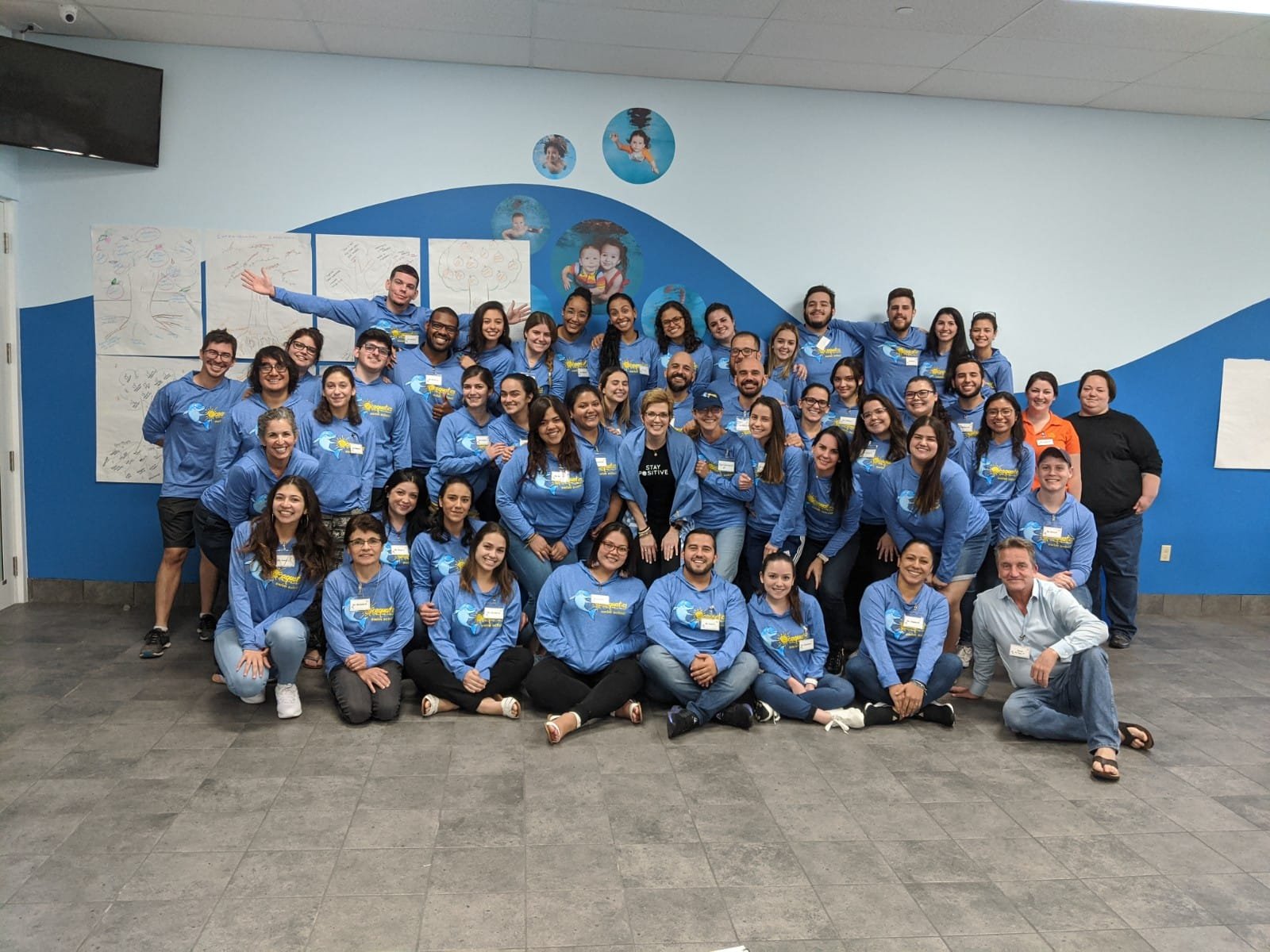
I stood in front of 50 members of my team who had helped me build this company and I told them I had sold Ocaquatics.
The room went silent. You could feel the fear. After everything we'd built together, I could see it in their eyes: "Here we go. Everything's about to change."
Then I told them the rest.
I sold it to them while they were sleeping through an Employee Ownership Trust. They went to bed as employees on Feb 29 and woke up as co-owners on March 1, 2024.
The reaction was something I'll carry with me forever. Shock. Disbelief. Joy. Tears. Hugging. One of our custodians, who's been with us for 15 years, just stood there shaking his head with the biggest smile I've ever seen.
People ask me why I didn't just sell to private equity. The offers were good. After 30 years of grinding, I could have taken the money and walked away.
But I kept thinking about the people in that room. The ones who show up early. The ones who stay late. The ones who treat other people's children like their own every single day.
Those are the people who built this company. And those are the people who deserve to own it.
Of our co-owners at the time of sale, 78% of them are women. 94% identify as Hispanic or Black. Almost 70% were born in another country. This isn't just employee ownership. It's wealth creation for people who have historically been shut out of ownership.
That announcement day is still the proudest moment of my career. And probably always will be.
My Logo Is a Doodle. And I Wouldn't Have It Any Other Way.
I need to tell you about my signature. Because it's not what you'd expect from someone who has run a company for over 30 years.
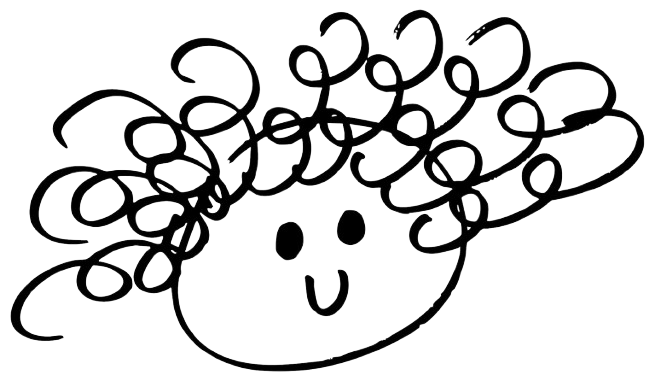
It's a smiley face. Hand-drawn. Curly hair. Big grin. That's it. That is my signature that has now become my personal logo.
No sleek typography. No carefully chosen color palette. In fact, I tried working with a designer to make something more "professional", more reflective of what I saw other business owners doing but it further reinforced what I always knew... I've got to stick to the doodle. The same one I've been drawing since high school..
I started sketching it in the back of notebooks sometime around junior or senior year. It just kind of happened. A little smiley face with wild curly hair that looked like me. I'd sign notes with it. Scribble it on papers. It became my thing.
Then I kept doing it in college. And when I started Ocaquatics Swim School. And for the next 30 something years after that.
I once tried to sign a bank document with it. The banker was not amused. Apparently smiley faces don't count as legal signatures. Who knew?
But here's why I love it and why I've never replaced it with something more “polished."
That little doodle is me. It's positive. It's a little quirky. And it makes people smile, which is kind of the whole point.
When I look around at the logos in the business world, especially in the thought leadership and speaking space, everything looks the same. Clean lines. Muted colors. Very serious. And after a while, they all kind of blend together.
My smiley face with the curly hair? Nobody forgets that. People see it and they instantly get a sense of who I am before I've said a single word and no branding agency could replicate that in the same way. That I'm approachable and I'm fun. And while I take what I do seriously, I take myself lightly. And I'm going to authentically share the real ups and downs of building a business over three decades.
I think your brand should feel like you. Not like a version of you that's been filtered and polished and boardroom-approved until all the personality has been sucked out of it.
I built a swim school from a hotel pool into an employee-owned, certified B Corp. We have taught over 3.2 million swimming lessons and we are just getting started! I turned down private equity. I did things differently my entire career. So why would my personal logo now be any different?
If you're starting something new, or reinventing yourself, or stepping into a new chapter, here's my advice: don't overthink the branding. Find the thing that's authentically you, even if it's a little weird, even if a banker frowns at it, and lean in all the way.
My doodle has outlasted every trend, every rebrand suggestion, and every well-meaning graphic designer who offered to "upgrade" it.
Some things don't need upgrading. They just need to be unapologetically themselves.
Just like that curly-haired girl who drew it.